
Posts Tagged ‘EPA’
Scott Pruitt wins 2017 Golden Padlock
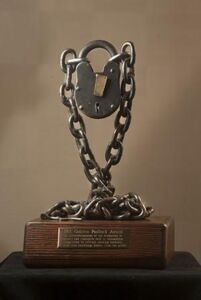
Investigative Reporters and Editors has named Scott Pruitt, the Oklahoma Attorney General’s Office and the U.S. Environmental Protection Agency as the winner of its annual Golden Padlock Award recognizing the most secretive U.S. agency or individual. Pruitt was selected for this honor for steadfastly refusing to provide emails in the public interest and removing information…
Read MoreEPA: Open data portal to remain online
Reporters rushed to download data from the Environmental Protection Agency’s open data portal after a contractor reported the portal would shut down this Friday. But the EPA called reports untrue Monday morning and stated that the site will not close and that data will remain available. Users visiting the EPA’s open data portal were greeted…
Read MoreAUDIO: Using data to cover hazmat pollution
By Hannah Schmidt Journalists Denise Malan, Ben Poston and Tim Wheeler all used data to create stories on hazardous materials and the environment. The three discussed state and national databases that track pollution and hazardous waste at the NICAR Conference in Baltimore. NICAR offers a hazardous waste database. Malan described how to use it and what…
Read MoreReport from U.S. Senate committee claims EPA lacks transparency
Minority members of the U.S. Senate Environment and Public Works Committee released a report on Sept. 9, 2013 claiming that the EPA has “a dismal history of competently and timely responding to FOIA requests,” has failed to adequately train staff members on FOIA policies, has shown bias in deciding to honor fee waiver requests, and…
Read MoreJournalism organizations call for greater transparency
Last week, The Association of Health Care Journalists, along with IRE and five other journalism and open-government groups, sent a letter to the U.S. Department of Agriculture calling for the release of public information about the country’s food stamp program. From the AHCJ blog: Currently, the USDA refuses to reveal how much money individual retailers…
Read More2012 IRE Conference audio now available
You can now purchase a DVD with over 100 hours of recorded panels from the 2012 IRE Conference in Boston. Please go here to place your order today. Conference attendees can obtain a copy for $5 (to cover shipping/handling) by using the discount code received via email. Additional copies can be ordered for $25 each.…
Read MoreGhost Factories: Behind the Story and Interactive
By Anthony DeBarros USA TODAY In April, after USA TODAY published its Ghost Factories investigation into forgotten lead smelters, we heard from several people who wanted to know more about how the project came together — particularly the online package that included details on more than 230 of the former factories. The following is an…
Read MoreLiberate the data with ScraperWiki at the CAR Conference

Tired of government agencies that care more about protecting their data than the public? Frustrated by official websites that defiantly offer no easy way to download vital data sets? It’s time to fight back. Join IRE and Scraperwiki for a 12-hour data liberation marathon during the 2012 Computer-Assisted Reporting Conference in St. Louis on Feb.…
Read More