
Posts Tagged ‘transportation’
IRE Radio Podcast | Chicago’s Secret Cash Machine
Chicago drivers have forked over more than $600 million for traffic fines captured by red light cameras. But an investigation by the Chicago Tribune found that the largest robotic camera system in the country hasn’t done much to make the streets safer. Instead, city officials have used Chicago drivers like a network of cash machines. Reporter…
Read MoreHow to examine fatal car crashes involving drunken drivers
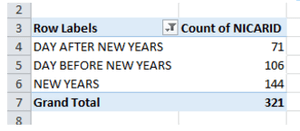
Police typically conduct sober checkpoints around the holidays, especially New Year’s Eve. Add context to your stories about holiday safety and travel by looking to look at trends in fatal crashes where drugs and alcohol were noted as a factor. We’ll walk you through how to quickly gather statistics and come up with story ideas…
Read MoreQuickly report on dangerous winter driving conditions using our new database
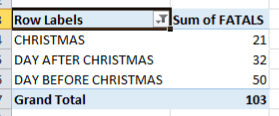
More than 3,100 people across the country died in fatal car crashes in the three-day window around Christmas in the 11-year period from 2003 to 2013. More than 500 of those involved snow, rain, sleet or hail, according to accident records. It’s easy to localize a story about dangerous winter driving conditions in your community.…
Read MoreUse our new simplified fatal accidents database to write holiday stories with impact
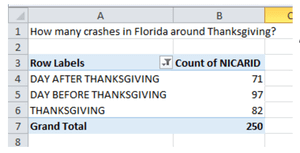
We know how busy the end of the year can be, so we’ve put together a simplified database on fatal car accidents to help you produce year-end stories with impact. Our full DOT Fatality Analysis Reporting System database (FARS) has 19 tables and almost 800 columns of detailed information about fatal car accidents. To save…
Read MoreAssessing and mapping dangerous intersections, traffic fatalities in your community

A still image from the Orlando Sentinel’s Blood in the Streets animated video. By Scott Powers and Arelis Hernandez, the Orlando Sentinel This past winter, after an Orlando Sentinel editor almost ran down a pedestrian for the umpteenth time – a moment which occurred about the same time that our breaking-news desk had to write…
Read MoreHow to use boating accident data in an investigation

FCIR created this map of boating accidents. Click the map for the interactive version. Last January, Florida Center for Investigative Reporting and NBC 6 in Miami announced a partnership to produce more local in-depth investigations. Even before our partnership was announced, we had already decided during a brainstorm session that boating fatalities would be one…
Read MoreGovernments battle to maintain bridges
By Ryan McGeeney, The Arkansas Democrat-Gazette When Washington County employees began tearing down the Miley Wagon Bridge near Baldwin earlier this year, there was no doubt about how the county was going to stay within its estimated $400,000 budget for the project: in-house manpower and resourceful purchasing. A quarter of the road bridges in Arkansas are…
Read MoreBehind the Story: Simple math reveals errors in lucrative speed camera system
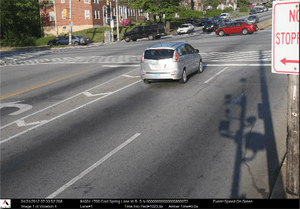
This car received a ticket from a Baltimore area camera while stopped at a red light. This case was one of the errors uncovered in the Baltimore Sun’s series on red light cameras. The Baltimore Sun’s investigation of red light cameras over the past year prompted changes to the system a city task force to…
Read MoreLa Nacion efforts bring open data to Argentina
After taking an introductory data journalism course, a small group in Argentina set out to transform the way data journalism was done in their country, a country where data was barely updated, let alone public. They fought for open data and analyze it in the public interest. The result of their efforts is La Nacion…
Read MoreIntroducing ninth beat book: Investigating Religion
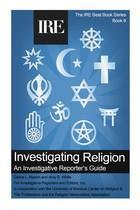
IRE is proud to offer the ninth title in the beat book series, Investigating Religion: An Investigative Reporter’s Guide by Debra L. Mason and Amy B. White. Investigating Religion includes chapters on what public records you can request, finding sources and knowing which are credible and best practices on the religion beat. To order a copy, click here.…
Read More